Paul Verlaine
Paul Verlaine (AD 1844–1896) was the lyrical genius and patron saint of France’s poètes maudits -- the “accursed poets” who turned self-destruction, or at least the appearance of it, into high art. A founding father of Symbolism and Decadence, he revolutionized French verse by stripping away the rhetorical clutter of the Parnassians in favor of pure musicality and suggestion. Yet his life was utter melodrama: a volatile, absinthe-soaked affair with the teenage prodigy-poet Arthur Rimbaud ended in a Brussels hotel room where Verlaine shot his young lover in the wrist, earning himself two years in Mons prison and a sudden, fervent Catholic conversion, which soon faded. Returning to old habits upon release, and looking older than his years, he drifted between hospital beds, seedy cafés, and sudden bursts of devotional or erotic verse. Crowned the “Prince of Poets” by a generation that worshipped his art, he lived just one step above the gutter, when not actually in it.
Few poets have conjured so delicate and haunting a music out of a life spent navigating its ruins.
Books in English Translation
Cellulely (Poetry)
Fêtes Galantes & Songs Without Words (Poetry, Symbolist Poetry, Decadentism)
My Hospitals & My Prisons (Biography)
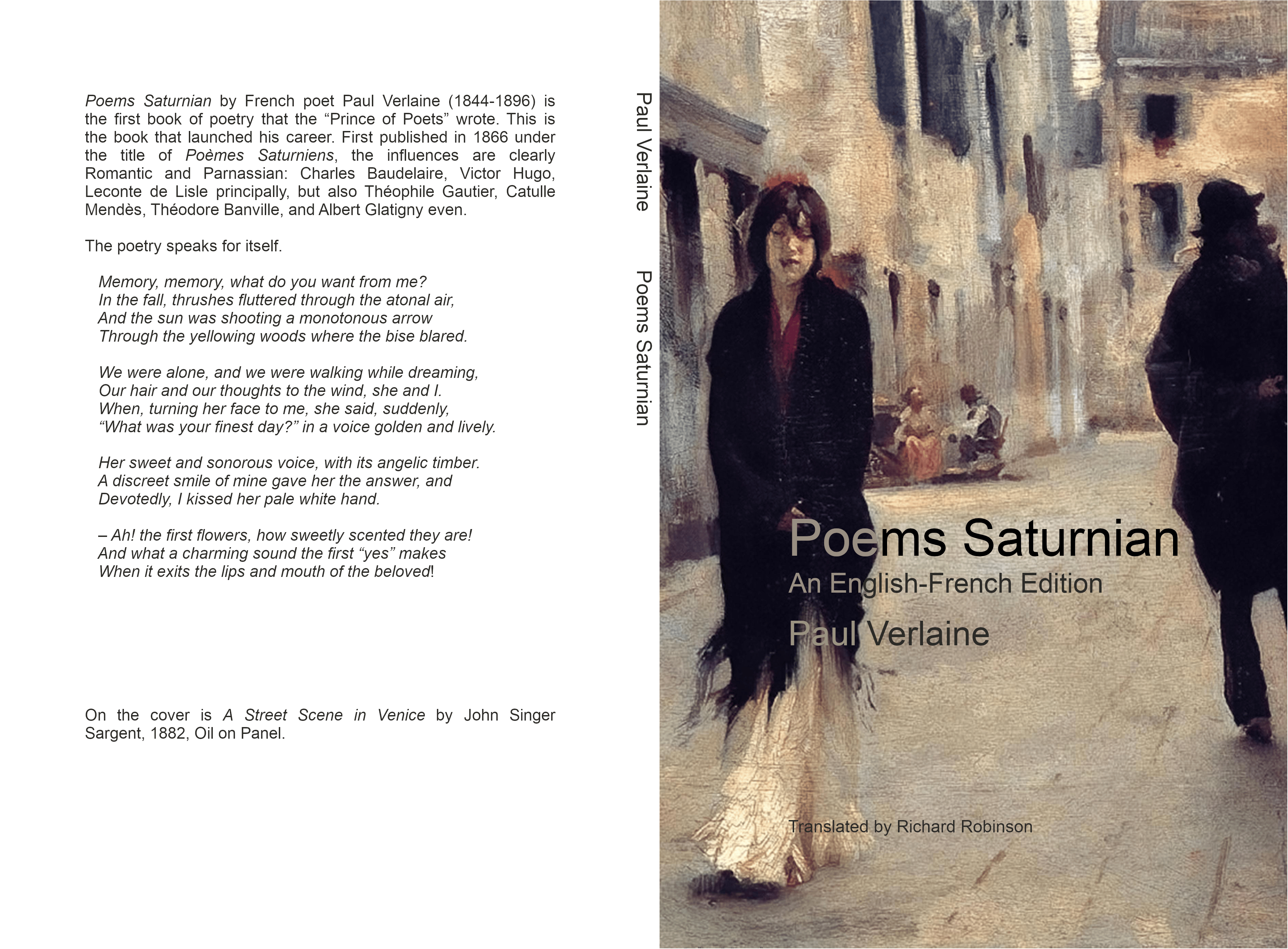
Poems Saturnian (Poetry, Symbolist Poetry, Parnassian Poetry)
Songs for Her & Odes in Her Honor (Poetry)
The Good Song (Poetry, Symbolist Poetry)
Voyage in France by a Frenchman (Social Criticism, Religion, Nationalism)